
Why Sunshine Coast homes get dirty the way they do
Living on the Sunshine Coast means humid summers, regular rain and, for many homes, salty air. Properties close to the beach in suburbs such as Mooloolaba, Coolum Beach, Kawana Waters and Caloundra often build up a film of salt and grime on glass, frames and walls. Homes in leafier or more sheltered spots tend to see more mould and green growth on shaded walls, fences and paths.
Both look like dirt, but they need different treatment. Salt film and general grime rinse off with the right technique. Organic growth has to be killed, not just blasted, or it comes straight back.
What is soft washing?
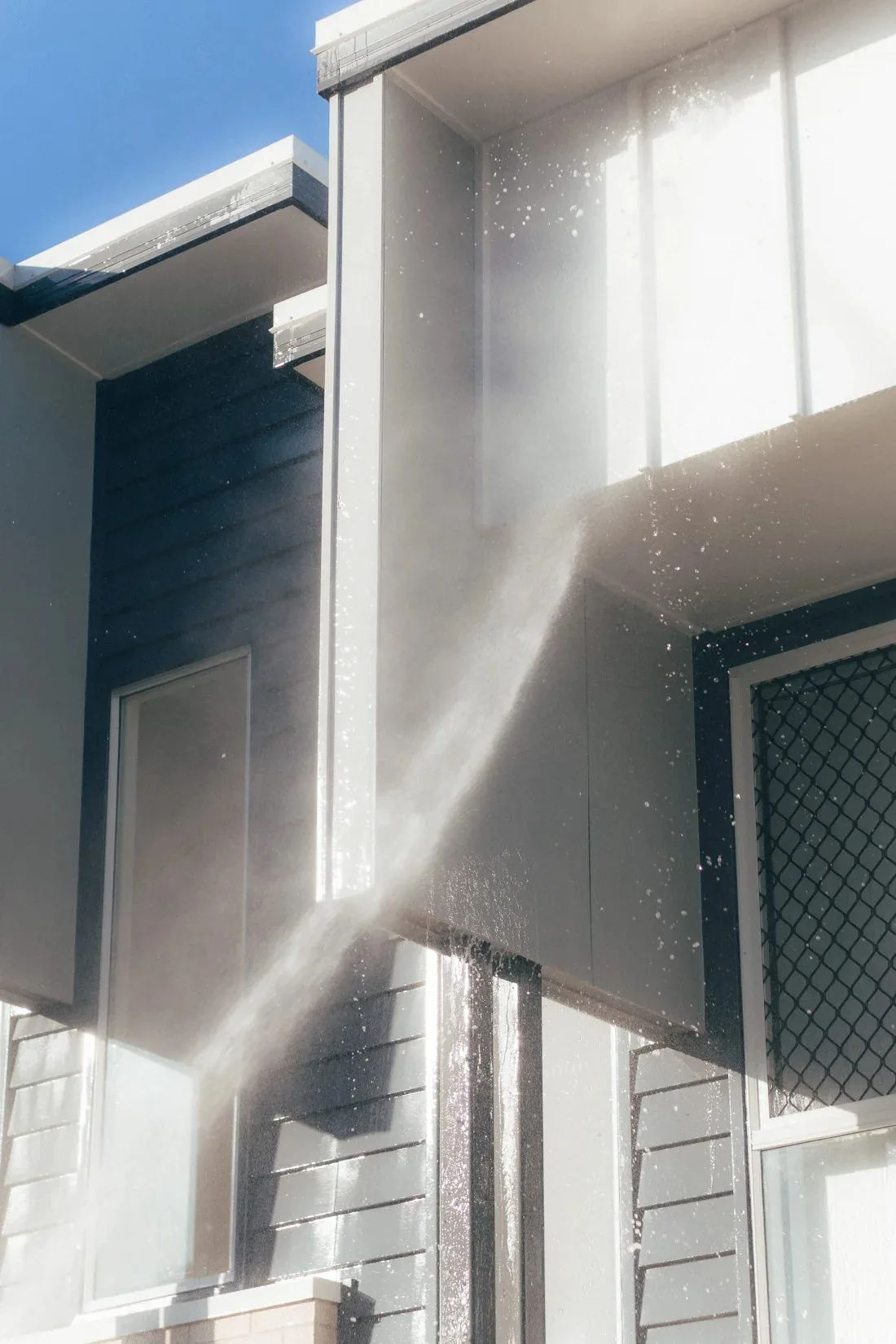
Soft washing is a low-pressure cleaning method. A cleaning solution is applied to the surface, left to dwell so it can break down organic growth, and then rinsed off gently. The solution does most of the work, so the surface is never hit with force.
Because it relies on dwell time rather than pressure, soft washing suits surfaces that a strong jet can damage: painted finishes, render, cladding, eaves, fascias and painted fences.
What is pressure washing?
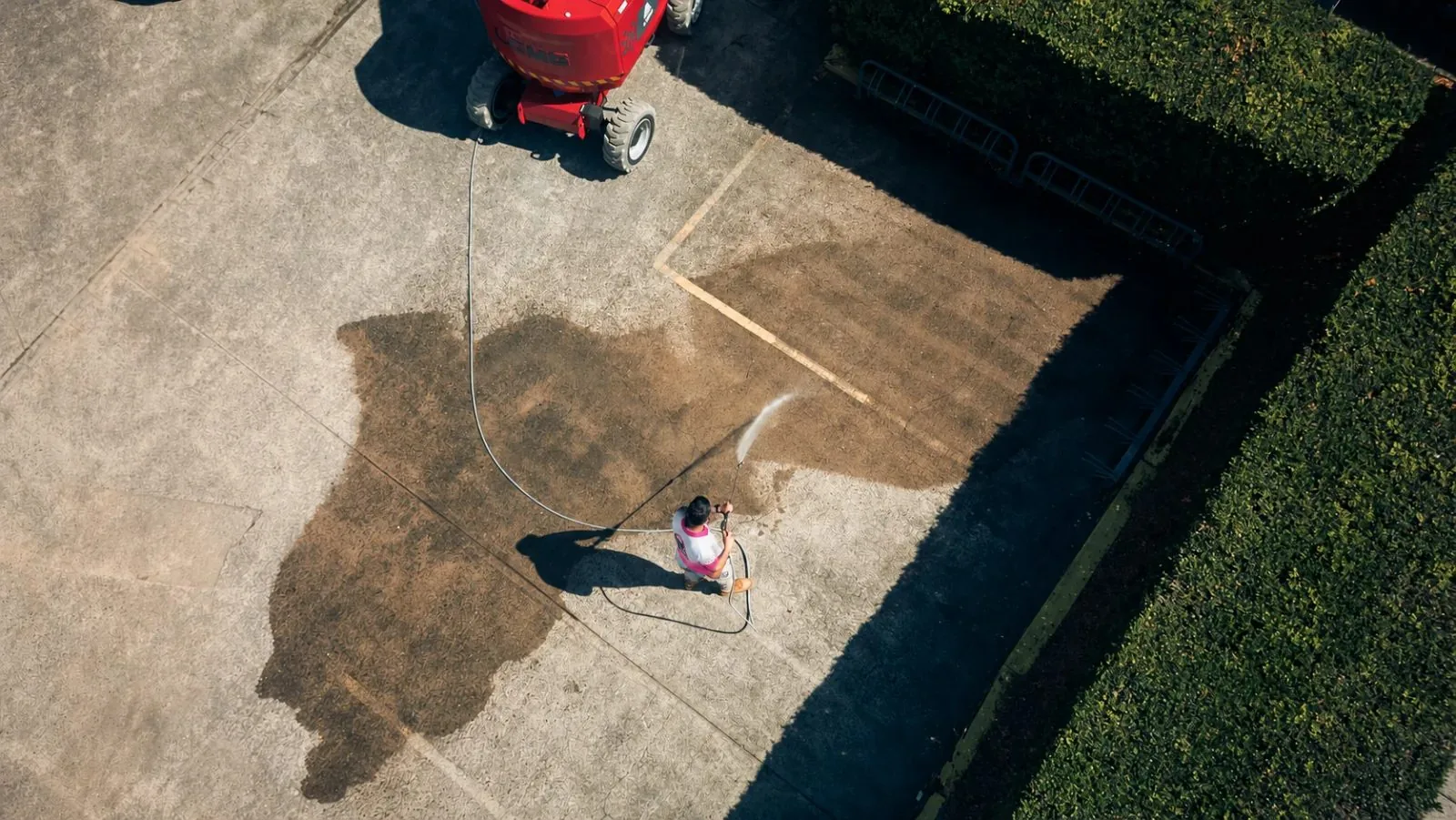
Pressure washing, also called pressure cleaning, uses high-pressure water to strip dirt, tyre marks and grime from hard, durable surfaces. On the right surface, often with a rotary surface cleaner for an even finish, it gives a fast, uniform clean that is hard to match any other way.
On the wrong surface, the same pressure can etch paint, gouge timber, force water behind cladding or blast the joint sand out of pavers.
Which method suits each surface?
- Rendered and painted walls: soft wash.
- Weatherboard, fibre cement and other cladding: soft wash, rinsed at low pressure so water is not driven behind the boards.
- Eaves, fascias and the outside of gutters: soft wash.
- Concrete driveways and paths: pressure wash, ideally with a surface cleaner for an even finish.
- Pavers and exposed aggregate: pressure wash, with care around joints and any sealer. Ask your cleaner whether topping up the joint sand or resealing is included, or quoted separately.
- Timber decks: low pressure along the grain with a suitable cleaner, never a close-up high-pressure jet.
- Fences: soft wash for painted or stained fences, low pressure for bare timber. If a deck or fence is due for a fresh coat of oil or stain, ask your cleaner whether that is part of the job or a separate trade.
- Windows, glass balustrades and solar panels: neither. These need purified water and soft brushes, or a dedicated window clean.
On most homes a good result is a combination: soft washing for the walls, eaves and fences, pressure washing for the driveway, paths and pavers. That is how Koala Pressure Washing plans each job, after looking at the surfaces, their condition and the access on site.
What goes wrong when the wrong method is used
- Paint and render etched, streaked or lifted by high pressure.
- Water forced behind cladding or window frames, leading to leaks or swelling.
- Mould that looks gone after a pressure clean but returns within months because it was never killed.
- Driveways left patchy or striped after being cleaned with a hand wand instead of a surface cleaner.
- Cleaning solution left on surfaces without a proper rinse, marking them or affecting nearby plants.
Driveways, pavers, decks and fences: getting the outdoor areas right
The outdoor areas take the most wear on a Sunshine Coast home: sand, salt, leaf litter, tyre marks and mould on shaded paths. A few details make the difference between a clean that lasts and one that causes problems:
- Concrete driveways and paths: a rotary surface cleaner gives an even finish without the stripes a hand wand leaves. Heavy oil or rust marks usually need a stain remover rather than more pressure. Adbri recommends proprietary cleaners for stubborn stains on pavers, so ask whether stain treatment is in the quote.
- Pavers: use a pressure that cleans the face without blasting out the joint sand, and check the joints afterwards.
- Decks: clean along the grain at low pressure and let the timber dry fully before re-oiling or staining. Intergrain's coating advice is to start with clean, mould-free, dry timber.
- Fences and retaining walls: shaded sides grow mould first, so treat the organic growth rather than just blasting it, or it returns within months.
Our driveway cleaning service covers the hard surfaces in more detail.
Is soft washing safe for gardens, pets and waterways?
It can be, when it is done properly. Plants are wetted down before and rinsed after, the solution strength is matched to the job and runoff is controlled. Before you book, ask which products will be used and how the wastewater will be collected, rather than relying on a general eco-friendly label.
Runoff matters on the Sunshine Coast. Sunshine Coast Council explains that under the Environmental Protection Act 1994 it is an offence to deposit a prescribed water contaminant into stormwater drains, roadside gutters or waterways, or anywhere it could wash into them, and council publishes a fact sheet for mobile cleaning businesses. Ask any cleaner how they manage wastewater before you book.
How often should you wash your house on the Sunshine Coast?
There is no single answer. Beachside homes exposed to salt spray, and homes with shaded, south-facing walls, usually need attention more often than sheltered homes further inland. A simple check: dark streaks under the eaves, green on the shaded walls or a dull film on the windows all mean it is time.
The paint and steel makers give a useful guide. Dulux recommends washing its Weathershield exterior paint once a year in sheltered or inland areas and every six months in coastal areas, using low-pressure water. COLORBOND steel advises hosing down areas the rain does not reach at least every six months, and more often near the coast. Driveways and paths have no set cycle: clean them when mould, slipperiness or staining appears, which on shaded paths can be well before the house needs it.
What to expect when you book
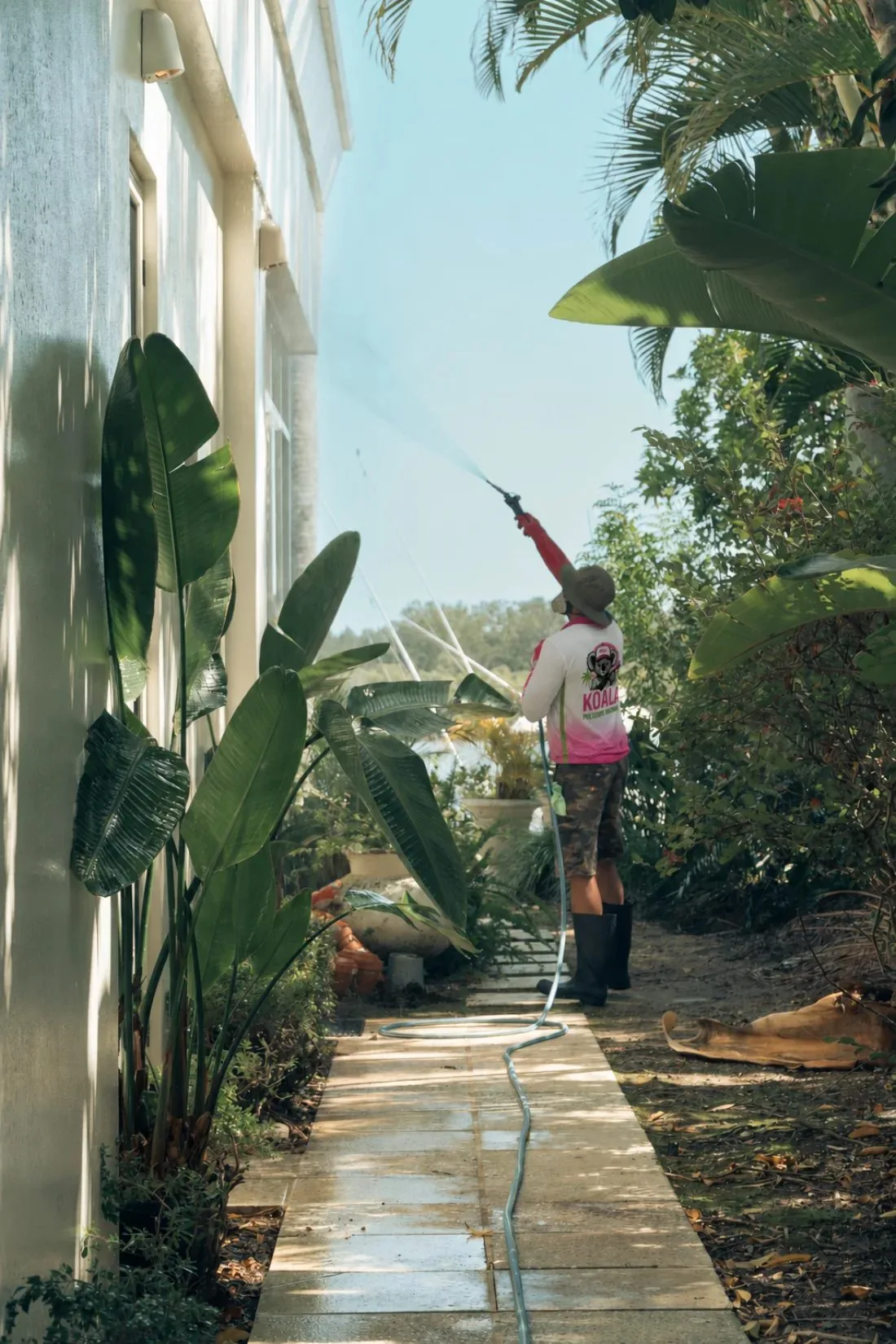
Koala Pressure Washing starts with a quick conversation and a look at the property, so the quote reflects your surfaces, access and the result you want. On the day, the team protects gardens and openings, cleans each surface with the method that suits it and walks you through the finish.
Koala works across the Sunshine Coast, including Maroochydore, Mooloolaba, Buderim, Caloundra, Coolum Beach, Mountain Creek, Kawana Waters, Bli Bli, Aura, Nirimba and Banya.
Koala Pressure Washing team